Are ‘Free Phone Spy’ Apps a Scam? What They Really Do
Search “free phone spy app” and the results promise something that doesn’t exist: full access to another person’s messages, calls and location, installed invisibly, for nothing. None of the technical claims add up, and yet the industry built around that promise is large enough to have its own recognisable pattern — the same landing pages, the same countdown timers, the same “verification” step right before the free thing suddenly needs a card number.
This article isn’t about scaring you off phone monitoring altogether — plenty of legitimate reasons exist to want visibility into a device, most commonly a parent looking after a young child’s phone. It’s about understanding exactly what a “free phone spy app” is actually selling, since the answer is very rarely software that works as advertised. Once you can see the pattern, the free phone spy apps scam becomes easy to spot before you hand over anything.
- The promise these sites make, and why it can’t be true
- How the funnel actually works
- Why ‘free’ can’t pay for what’s being promised
- The four things that actually happen
- Is any of this legal to use?
- Red flags to check before you click “verify”
- What a legitimate, transparent app looks like instead
- If you’ve already entered your details
- Questions people actually ask
The promise these sites make, and why it can’t be true
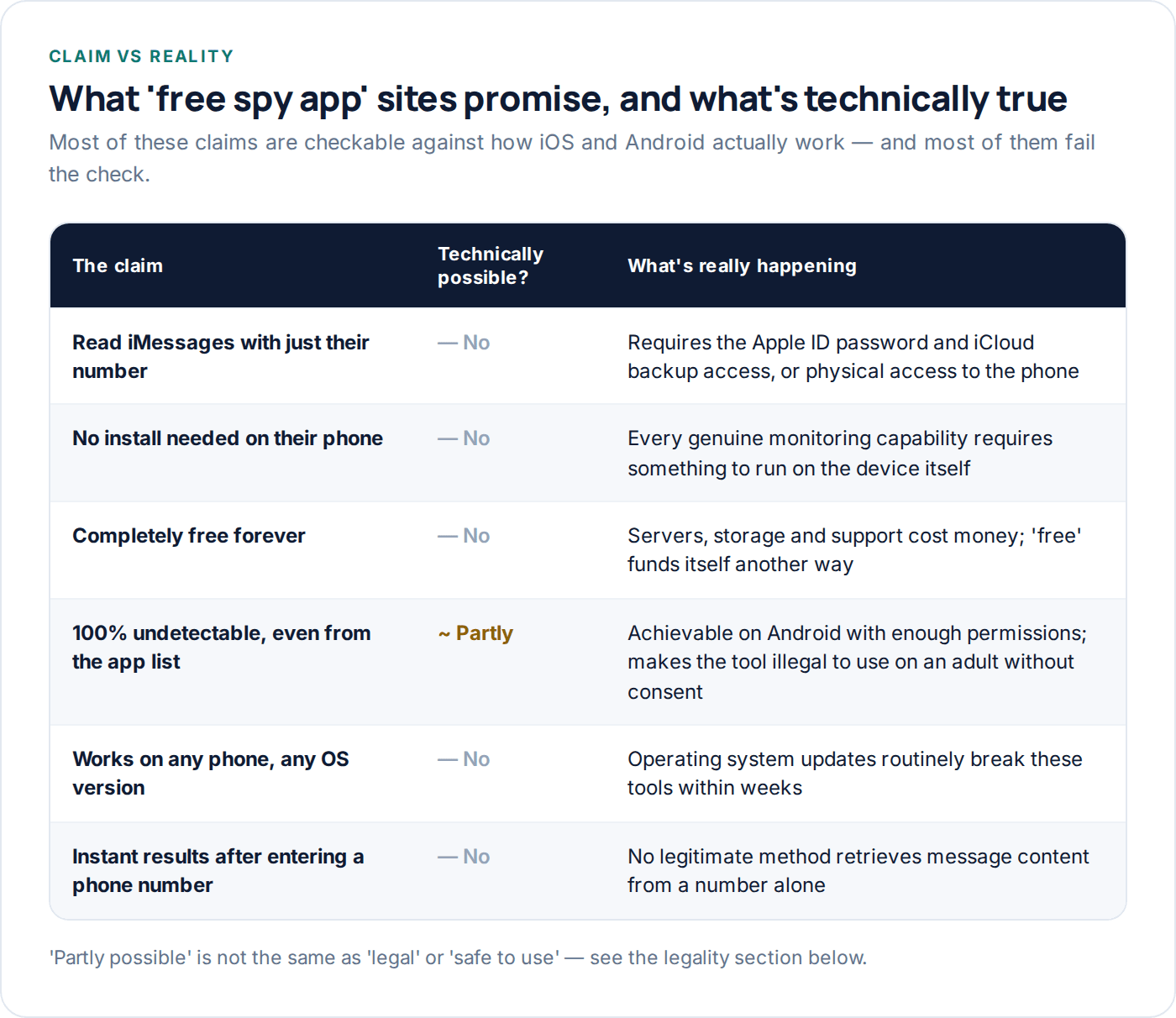
The pitch is consistent across dozens of sites: enter a phone number, see everything, no app needed on the target device, completely undetectable, completely free. Every part of that sentence conflicts with how modern phones actually work, and it’s worth being specific about why, because the specificity is what makes the scam obvious once you see it.
Both iOS and Android are built, deliberately, to stop one app or website from reading another app’s private data using nothing but a phone number. Genuine monitoring capability — of any kind, for any legitimate purpose — requires either something installed and granted permissions on the device itself, or access to the account credentials (Apple ID or Google account) that device is signed into. There is no third route. A site that skips both of those requirements and asks only for a phone number is not describing a working method; it’s describing the opening line of a script.
How the funnel actually works
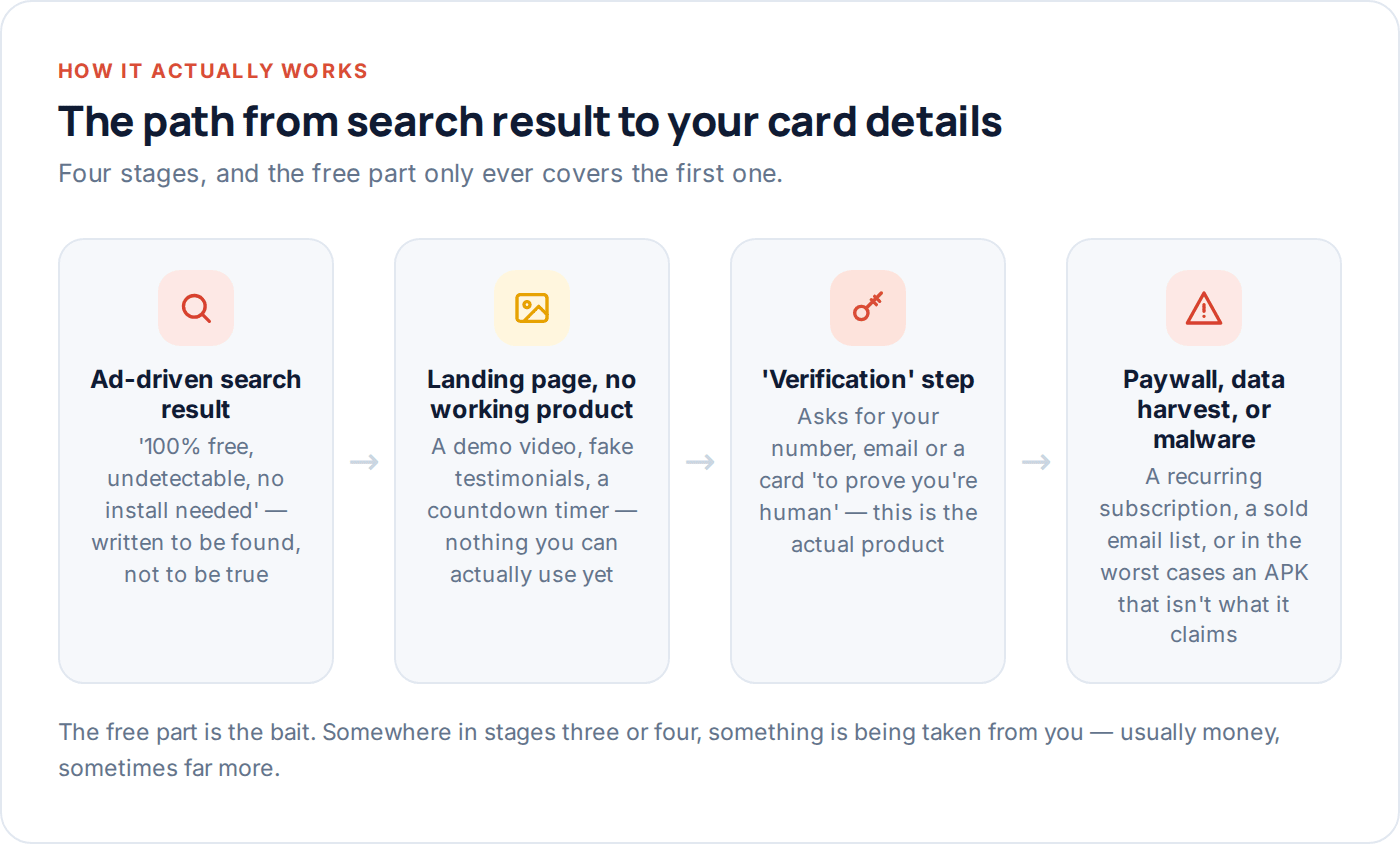
Once you see one of these sites laid out as a sequence rather than a single page, the pattern is hard to unsee. It starts with an ad or a search result written for search engines rather than accuracy — “100% free,” “no jailbreak,” “undetectable” are keyword choices, not product descriptions. Clicking through lands on a page with a demo video that was never running on a real phone, a handful of testimonials that can’t be verified, and often a countdown timer designed to discourage you from reading closely.
The actual transaction happens at the next step, disguised as a formality: a “verification” screen asking for your phone number, your email, or increasingly, a card number to “confirm you’re not a bot” before the free tool unlocks. That step is the product. Everything before it was marketing to get you there.
Why ‘free’ can’t pay for what’s being promised
Real monitoring software, of the legitimate kind, has real infrastructure costs: servers to receive and store data, a support team to answer questions, ongoing engineering to keep working after each OS update breaks something. Those costs exist whether ten people use the product or ten million. A genuinely free product with no ads, no data resale and no subscription somewhere in the chain isn’t covering those costs — which means either the costs aren’t being paid (the product doesn’t actually work), or they’re being covered by something the marketing doesn’t mention.
The four things that actually happen
Having looked at how these funnels are typically structured, the outcome usually lands in one of four categories, and it’s worth knowing all four because they call for different responses.
The ad farm
You never leave the marketing pages. Every “download” button is another ad or affiliate link. No software, no data, but your time and your clicks were the product.
The subscription trap
A short free trial genuinely starts, then auto-renews at a price buried in small print, with cancellation deliberately made slow or hidden behind a retention call.
The phishing page
The “verification” step collects a working email and phone number, sold on or used directly for further phishing attempts against you.
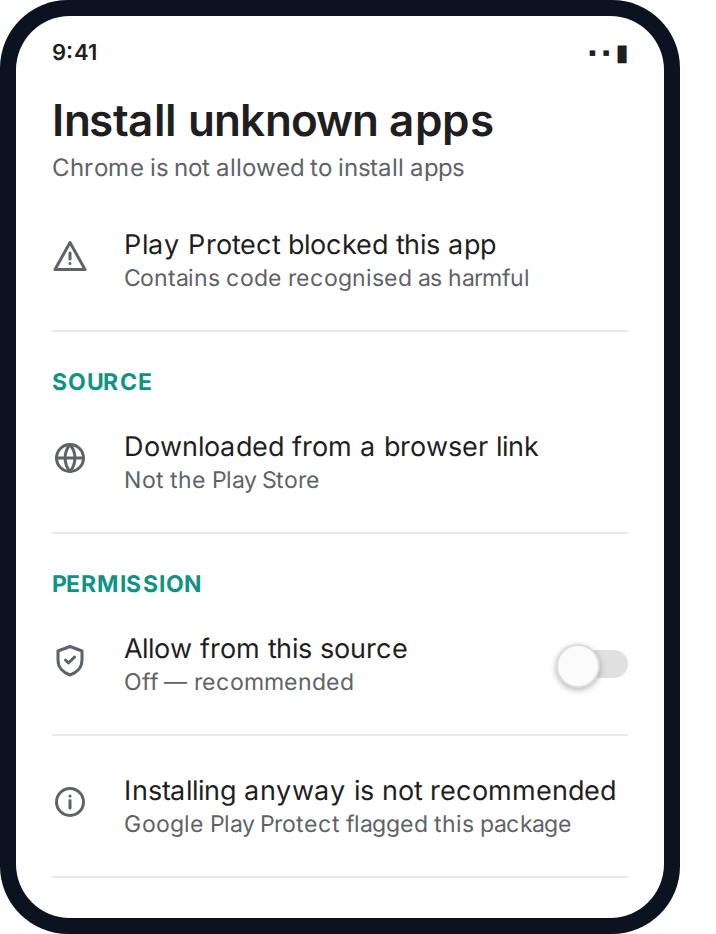
The fourth, less common but the most serious, is a download that genuinely installs something — usually presented as an APK on Android, since Apple’s app review makes this route far harder on iPhone. What it installs is rarely the monitoring tool advertised; it’s more often adware, a credential-stealing tool, or software that quietly enrols the phone in something else entirely. This is the outcome the Android warning screen further down exists to stop.
It’s worth being clear about why iPhone and Android differ here, since it explains a lot of the marketing dishonesty in this space. Apple reviews every app before it reaches the App Store and blocks installs from anywhere else by default, which makes a genuinely malicious “spy app” hard to distribute to iPhone users directly — so sites targeting iPhone owners lean instead on fake iCloud-login pages that simply steal the Apple ID password. Android allows installation from outside its official store, which is convenient for legitimate uses but is also the door most of the fourth-outcome cases above walk through.
Is any of this legal to use?
Separate from whether these tools work, there’s the question of whether using one would even be legal — and the honest answer for most of what’s marketed in this space is no. Installing monitoring software on another adult’s phone without their knowledge and consent is a criminal offence in most countries, regardless of the relationship. That includes partners, spouses and ex-partners; “we’re together” or “we used to be together” is not a legal defence.
Marketing that explicitly targets that use case — and a large share of “free spy app” advertising does, using language about catching a cheating partner — is advertising a crime, which is itself a reason to be suspicious of everything else the site claims. The one broadly legal use case in this entire category is a parent monitoring their own minor child’s device, and even then, the more defensible and durable approach is doing it openly rather than covertly.
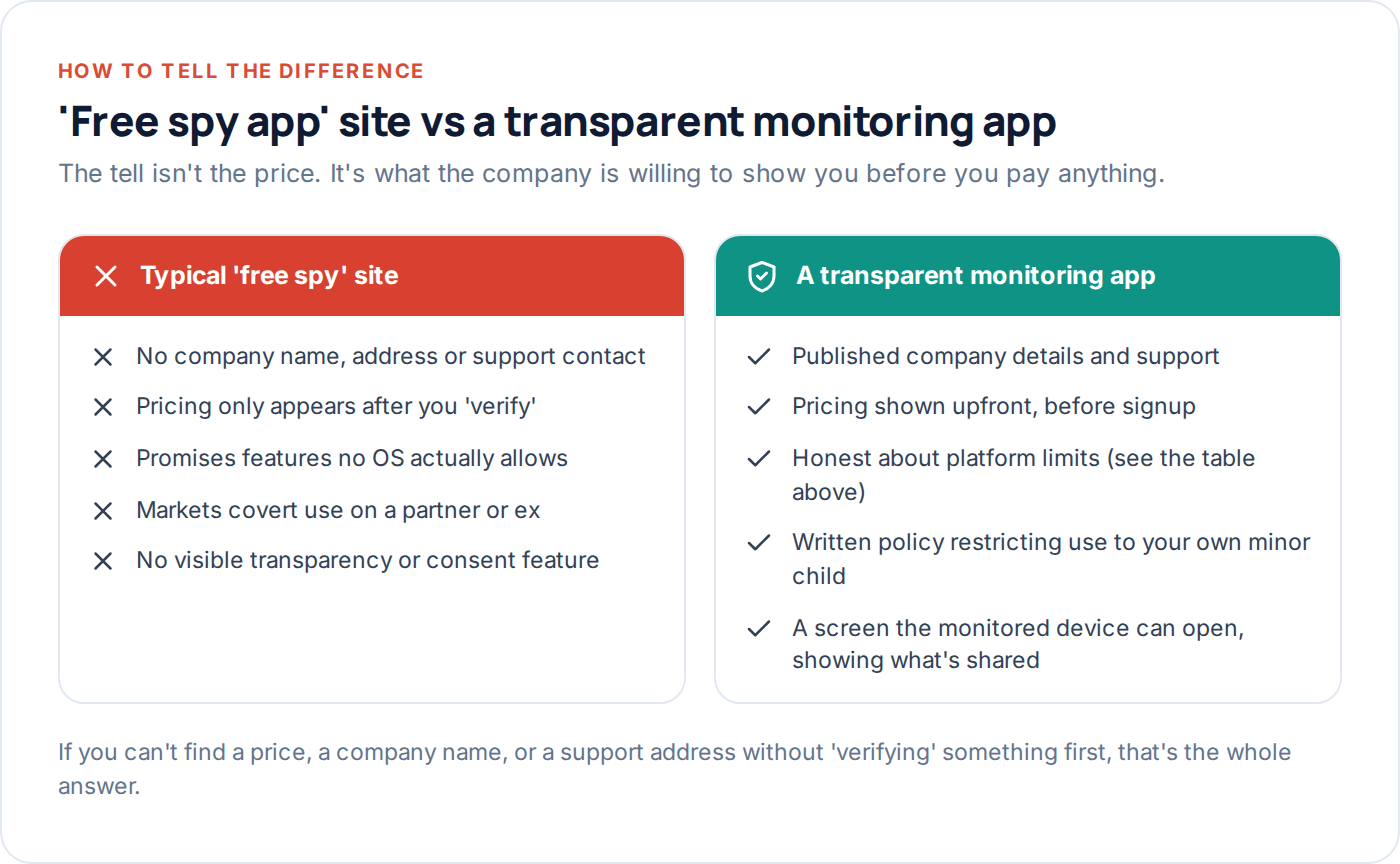
Red flags to check before you click “verify”
You don’t need technical expertise to filter most of this out — the tells are consistent and checkable in under a minute.
| Red flag | Why it matters |
|---|---|
| No company name or address anywhere | Legitimate software businesses are required to disclose this in most jurisdictions; its absence is deliberate. |
| Price only appears after “verification” | Genuine pricing is shown upfront. A hidden price is a sign the free offer was never the real transaction. |
| Claims that contradict how phones work | “No install needed,” “read iMessages with just a number” — these describe capabilities that don’t exist on stock devices. |
| Countdown timers and stock-photo testimonials | Manufactured urgency and unverifiable social proof are marketing patterns, not evidence of a working product. |
| No mention of consent or legality anywhere | A legitimate app has a policy about who it’s for. Silence on this, or explicit marketing for covert use, is a legal and ethical warning sign together. |
What a legitimate, transparent app looks like instead
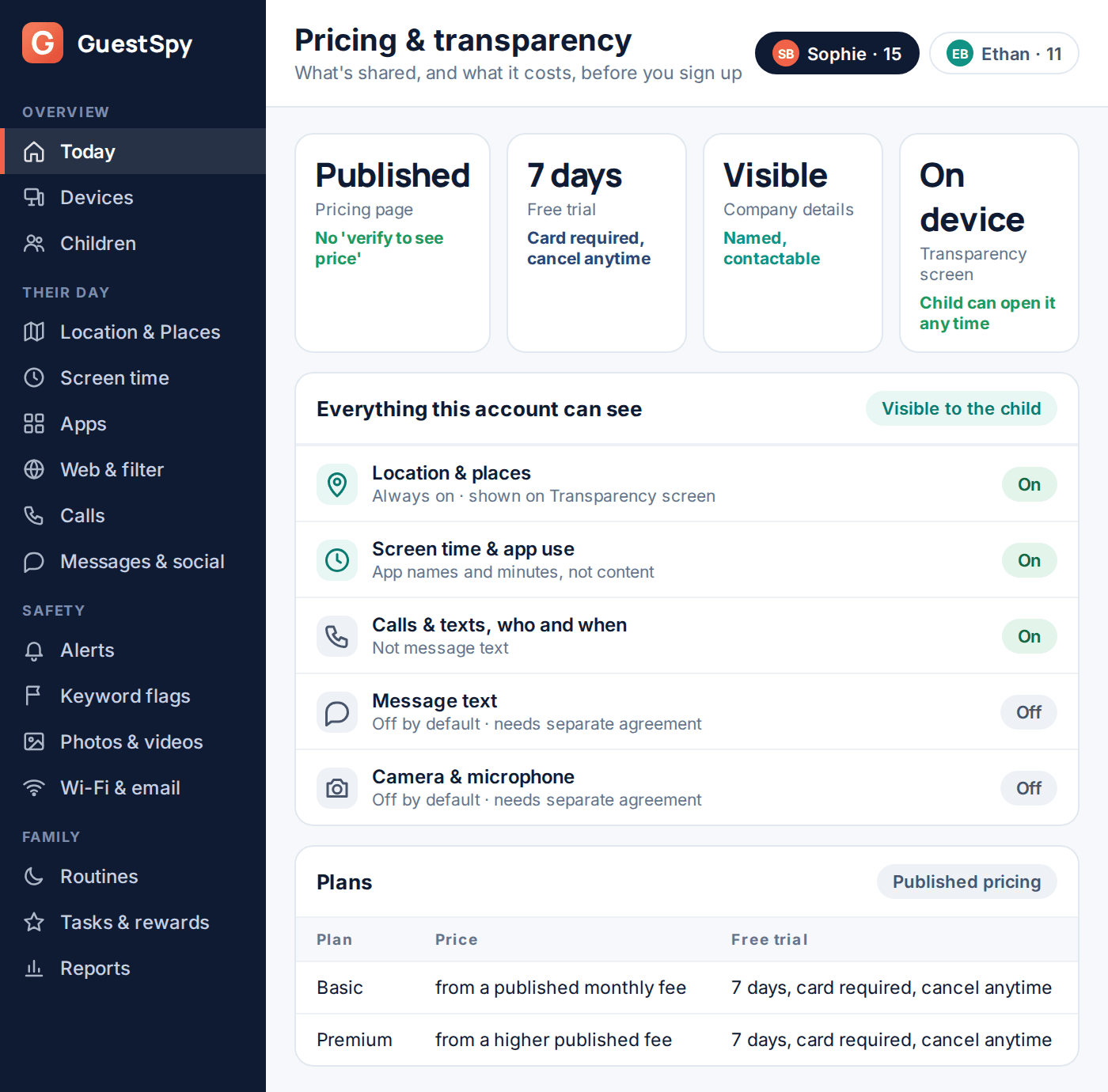
The alternative isn’t “no monitoring app can be trusted” — it’s that the trustworthy end of this market looks structurally different, and the difference is checkable before you commit to anything. A legitimate product, including GuestSpy, publishes its pricing without a “verification” gate, names the company behind it, and is explicit that it’s built for a parent monitoring their own minor child’s phone with the child’s knowledge — not for covert use on anyone else.
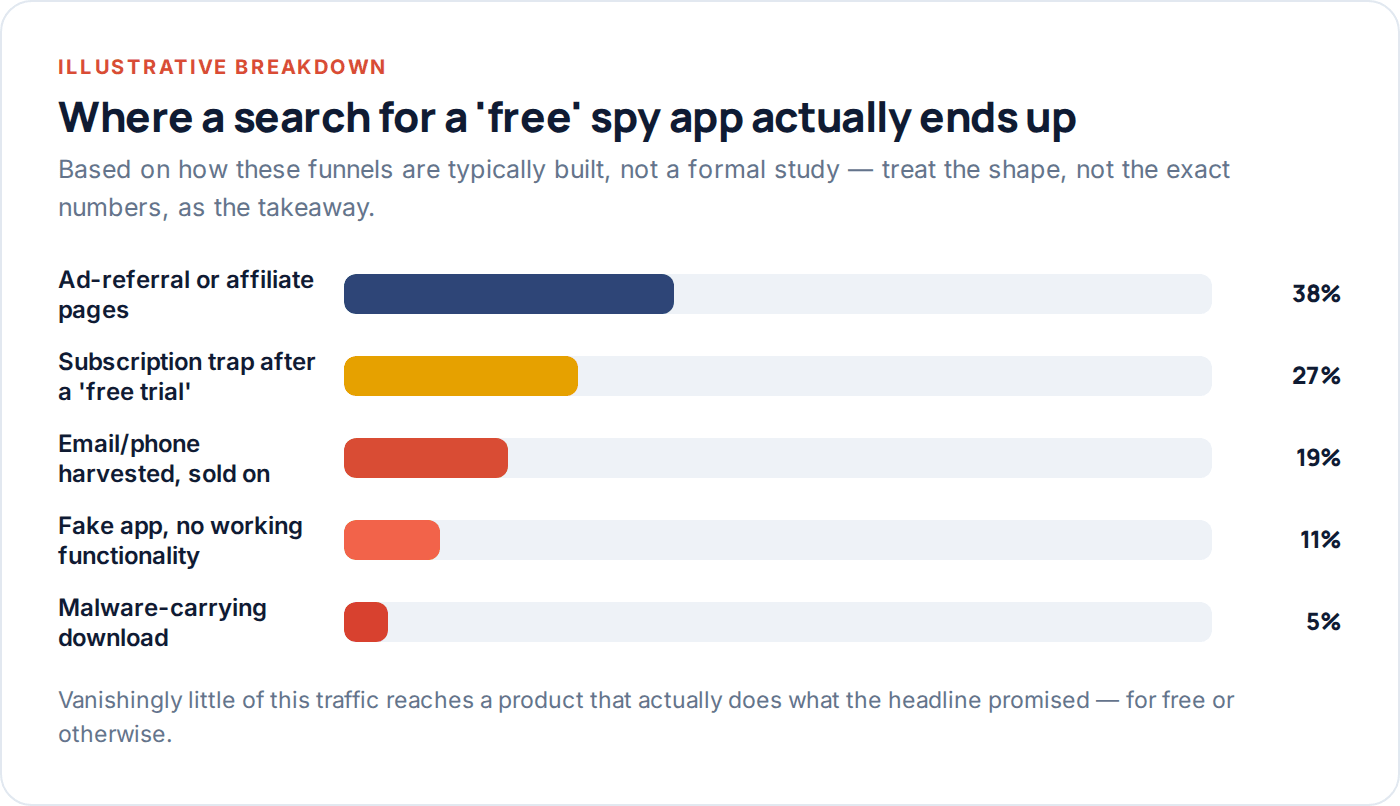
The clearest structural difference is a transparency feature: a screen the monitored phone’s user can open at any time, showing exactly what is being shared. That screen only makes sense if the product is designed for disclosed use — it’s the opposite of the “100% undetectable” pitch that defines the scam side of this market, and it’s a reasonable single test to apply to anything you’re considering.
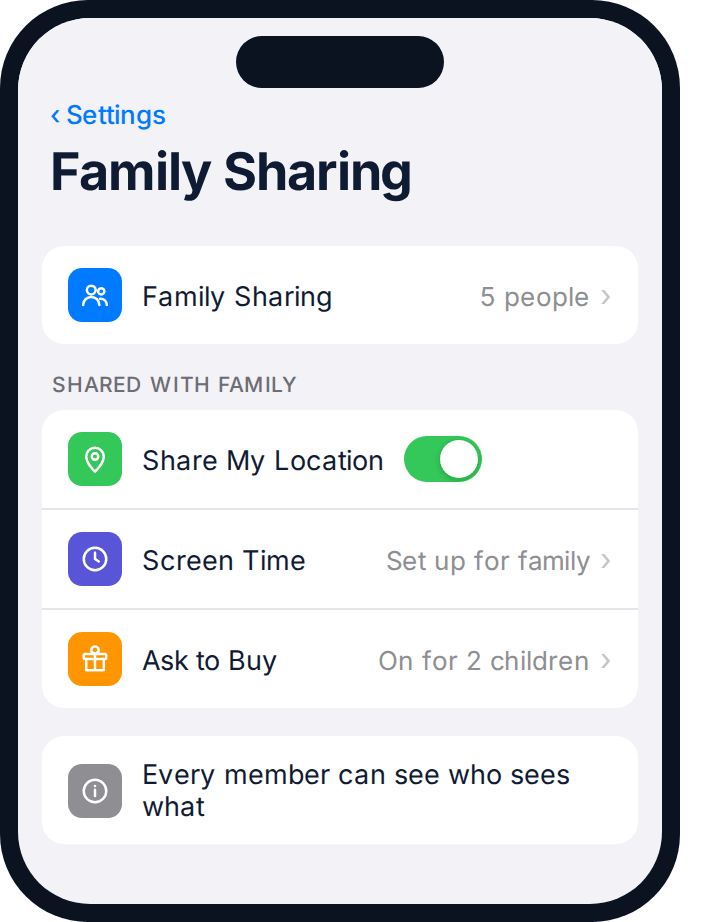
It’s worth noticing that even Apple’s own free family tools are built the same way. Family Sharing and location sharing between family members are visible to everyone in the group by design — nobody’s phone quietly reports on them without their screen showing it. That’s not a coincidence; it’s what a company with a genuine consumer product to protect actually builds, in contrast to a landing page with nothing to lose.
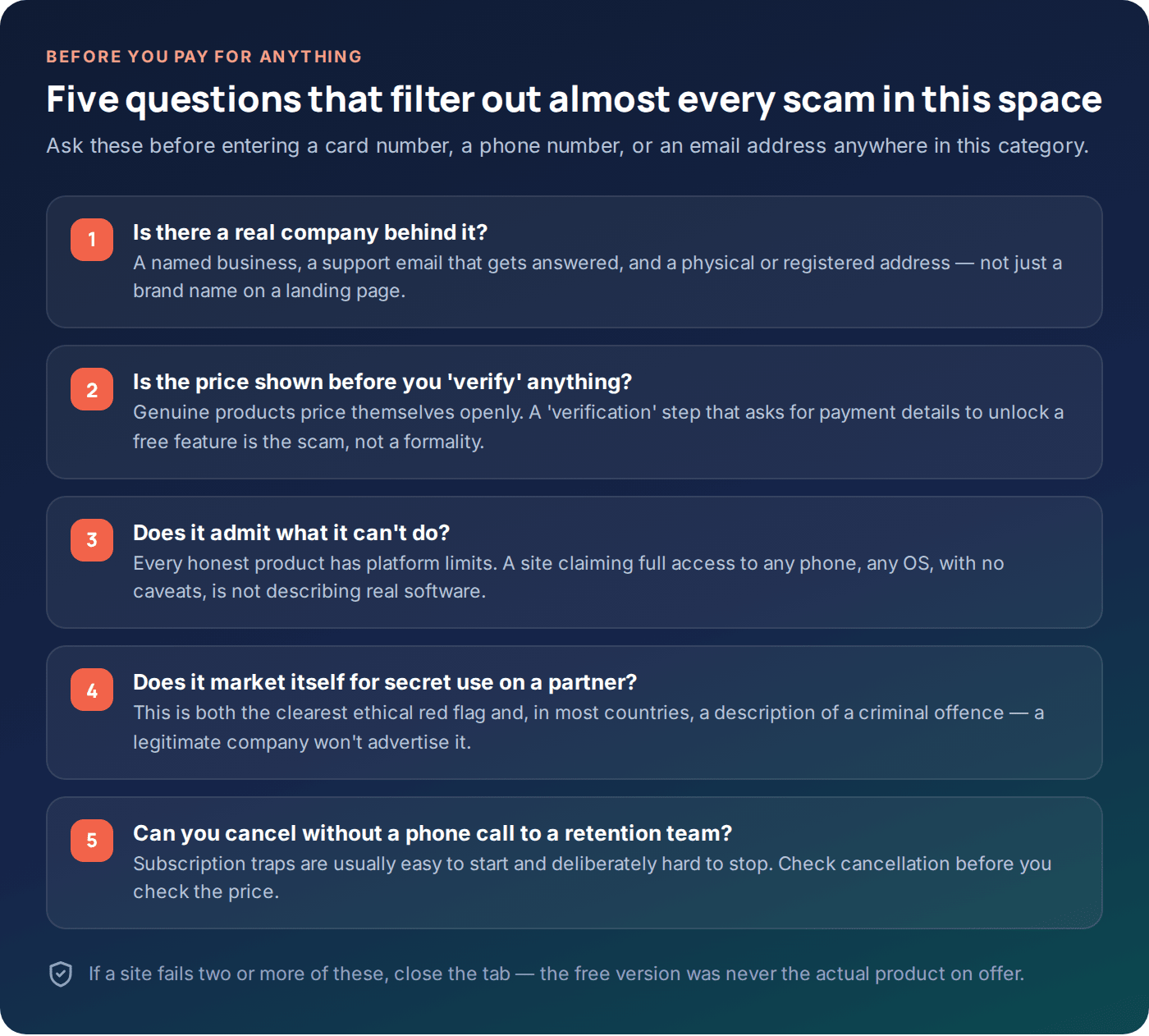
None of this means every paid monitoring app is trustworthy either — plenty of low-quality paid products exist too. But price alone was never the useful signal. Transparency, a named company, honest platform limits and a stated policy on consent are the actual checklist, and you can run through all of them before paying anything at all, the same way you’d check a published price and a visible transparency screen before trusting any monitoring product with a subscription.
If you’ve already entered your details
If you’ve already handed over a card number, a phone number, or an email address to one of these sites, a few concrete steps limit the damage. Contact your card provider to check for and dispute any recurring charge, and consider cancelling the card outright if the site made cancellation difficult to find. Change the password on any account tied to the email address you gave them, particularly if you reused a password there. Expect an uptick in spam calls and phishing texts for a while afterwards if you handed over a phone number — that’s the most common downstream consequence, and it fades over time rather than escalating.
None of this is a sign you did something foolish. These pages are built by people who design landing pages for a living, tested against thousands of visitors to find exactly the wording and urgency that gets a card number entered. Treating the response as a straightforward clean-up task, rather than something to feel embarrassed about, gets it handled faster.
Questions people actually ask
Is there any free phone spy app that actually works?
Not in the sense the ads promise — full remote access with no install and no consent, for nothing. Some free or low-cost family safety tools genuinely work within honest limits, most commonly Apple’s Screen Time and Google’s Family Link, both built into the OS and free. Anything promising more than that, for free, from a company you can’t identify, should be treated with real scepticism.
Can these sites actually access someone’s phone with just their number?
No. There is no legitimate technical method that retrieves message content, call logs or location from a phone number alone. Any site claiming this is either non-functional, collecting your information instead, or in rare cases distributing malware disguised as the tool you thought you were getting.
Is it illegal to even try using one of these apps?
Using covert monitoring software on another adult without consent is illegal in most countries, and that applies to the person using it, not just the one selling it. This guide assumes you’re researching whether a claim is genuine, not planning covert use — for that, see our acceptable use policy.
How do I know if I’ve already been scammed by one of these sites?
Check your card statement for a recurring charge you don’t recognise, particularly one starting a few days after a “free trial.” Check whether the email or phone number you gave them shows up in a data breach lookup. Neither guarantees anything happened, but both are worth ten minutes to rule out.
What’s different about GuestSpy’s pricing?
It’s published on the pricing page without a signup or “verification” step first, and the app is built around a transparency screen the monitored phone can open at any time — the opposite of the “undetectable” pitch this article is about.
My partner says they found a free app that reads my messages — is that possible?
On a stock iPhone, no — this isn’t technically achievable without your Apple ID password. On Android, something could theoretically be installed with enough permissions granted on the device itself, which requires physical access, not just a download. Either way, this would be illegal without your knowledge and consent, and worth addressing directly rather than investigating quietly.
The one-sentence version
If a phone monitoring product is free, hides its price until you “verify” something, and won’t name the company behind it, the product was never the software — it was you. For anything genuine, expect a named company, an upfront price, and honesty about what the platform you’re using actually allows; you can see how that looks in practice on our features page, and the FAQ covers most of what else people ask before signing up to anything in this category.
Keep reading
How to Check App Permissions on Your Phone
A ten-minute audit of what your apps can actually access — location, microphone, camera, accessibility and more — and how…
A Step-by-Step Guide to Securing a Hacked Account
Why email comes first, the exact settings that close the door behind an attacker, and the recovery steps most guides…
The Complete Guide to Detecting Spyware
The real symptoms worth worrying about, what usually turns out to be nothing, and the exact settings to check on…